
Roofing services
Replacing a worn-out roof in North Miami
The old roof comes off to the bare deck, any bad wood is replaced, and a complete new roof system goes on top.
From old roof to new
When patching has run its course
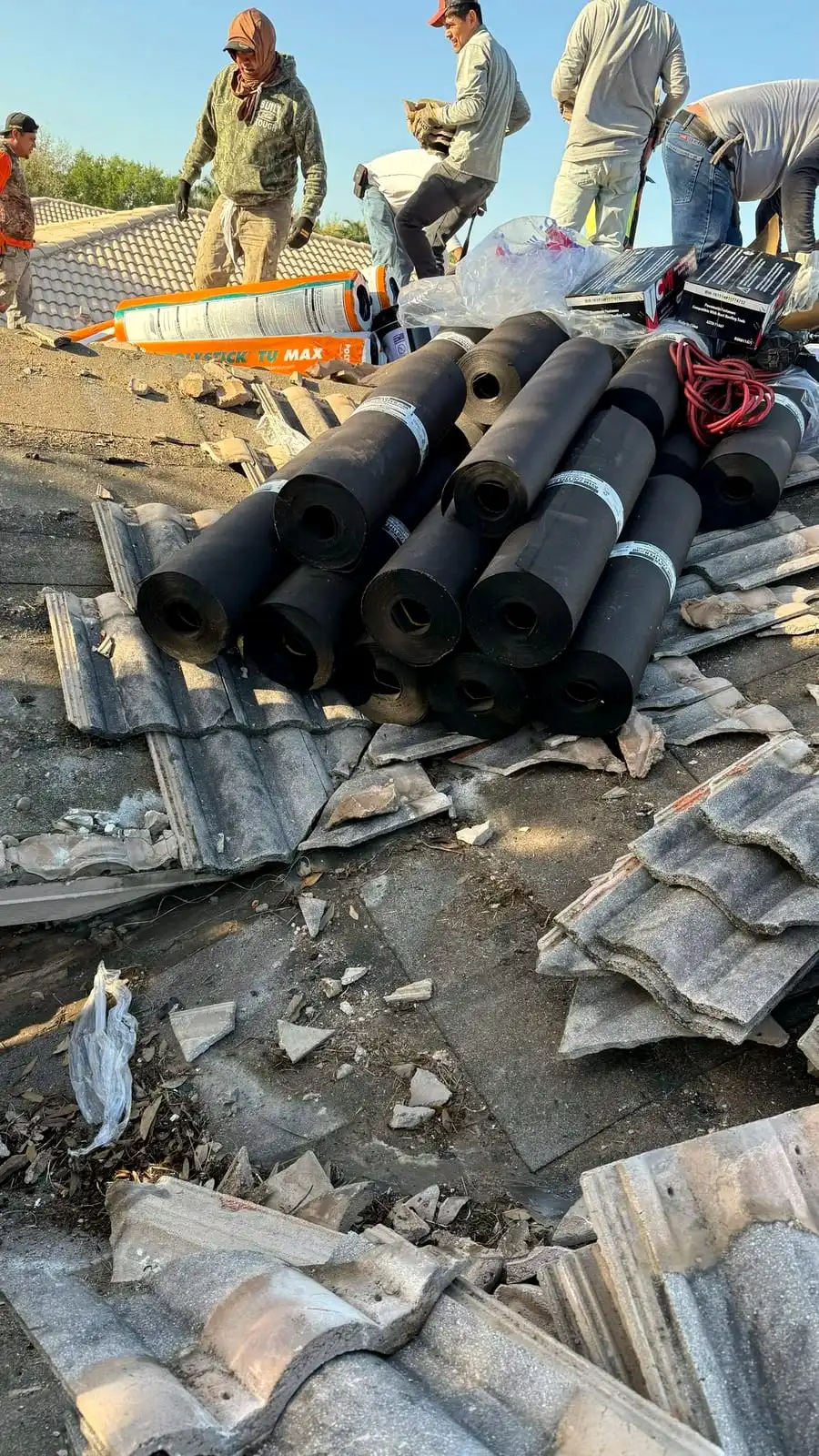
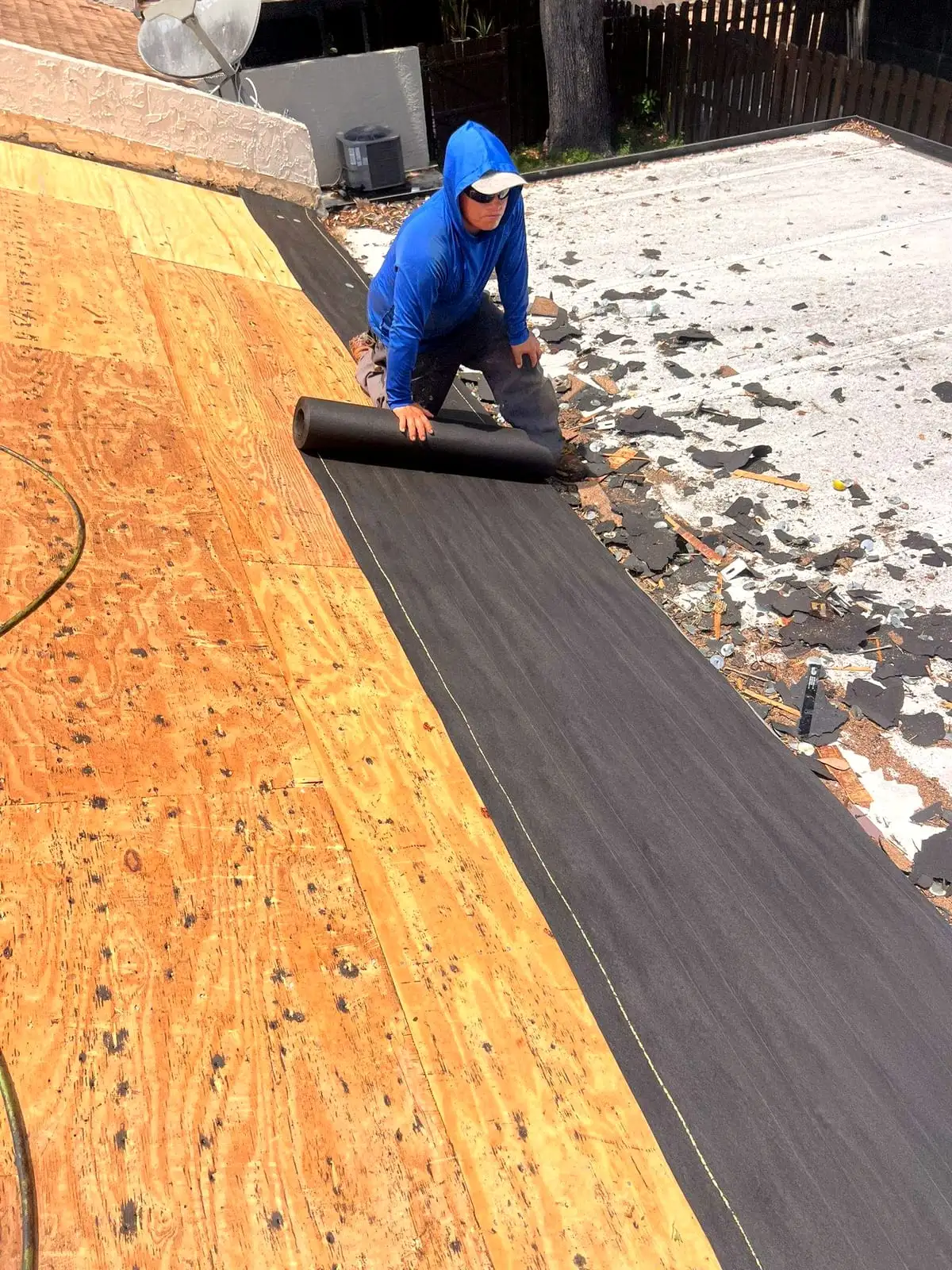
A replacement begins with stripping the old roof to the deck. Only then can each sheet of sheathing be inspected and any soft or rotted wood swapped out before something new is laid over it.
On a tile roof that means lifting and hauling off a great deal of heavy material, so the roof, the yard and the driveway all figure in the plan. From the clean deck upward the new roof goes on layer by layer: underlayment, flashing, then the covering you picked.
In Florida a replacement is permitted and inspected, and in Miami-Dade the products on the new roof must carry approval for the High-Velocity Hurricane Zone. It is also a chance to switch materials, within what your community association permits.
Before a replacement starts, ask how the old roof will be removed, how your property will be protected during tear-off and how the new roof will be fastened against wind. The answers reveal more about a job than the color of the tile.
What a replacement includes
- The old roof torn off to the deck
- Debris loaded and carted away
- Deck inspected, damaged sheathing replaced
- New underlayment over the full deck
- Fresh flashing along edges, valleys, walls and penetrations
- The finish covering of your choice: tile, metal, shingle or flat membrane
Reasons to consider it
When a new roof beats another repair
A single sign seldom settles it; a few together usually do.
Age
An aging roof whose underlayment and covering have little service left.
Leaks that keep moving
Each repair is followed by a new leak somewhere else.
Tile damage all over
Cracked or shifted tiles across much of the roof, not merely a few.
Whole slopes hit by a storm
Large sections damaged after a storm, not one spot.
Dips and soft spots
A roofline that sags, or decking that feels soft during an inspection.
A report that flags the roof
An insurer or a home inspection raises concerns about the roof’s condition.
Questions
Replacement questions
How do I choose between repairing and replacing?
When the damage stays in one area and the underlayment and deck are sound, repair usually makes sense. If leaks keep returning, damage is spread across the roof or the underlayment is worn out, a new roof can cost less over time than repair after repair.
Is it possible to switch materials during a replacement?
Often. Moving from shingle to tile or metal, for example, hinges on the structure, the permit and what your community association allows.
Are the rules different for a Miami-Dade replacement?
Yes. Miami-Dade is inside the High-Velocity Hurricane Zone of the Florida Building Code, which carries its own roofing provisions, and products on a new roof need approval for the zone: a Miami-Dade Notice of Acceptance (NOA) or a Florida Product Approval covering the HVHZ. Before work begins we tell you which products and rules apply to your roof.
Who takes the old roofing away?
We do. Tear-off debris is loaded and hauled off as part of the job.
How long does a re-roof take on site?
It varies with the roof’s size, the material, deck repairs found along the way, permit and inspection timing and the weather. We explain what to expect before work begins.
Is it time for a new roof?
Phone to compare repair with replacement, or send the details and we will call you back.